
Nine Towns, Zero Sidewalks — And Why That Matters More Than You Think
What a December road trip taught me about walkable communities, civic responsibility, and design.
This past December, Marvin and I, along with our dog Skipper, spent the month traveling to visit friends and relatives while working remotely. Nine towns. Nine neighborhoods. No sidewalks.
At first, I did not really notice. The weather was cold and rainy and we were not looking to stroll…but a few days in it felt like a pattern. By the end, it felt like a lesson.
To go for a walk meant stepping into the street or navigating uneven grass along the curb. There was no clear pedestrian realm — no defined space designed for people.
Even our dog was confused.
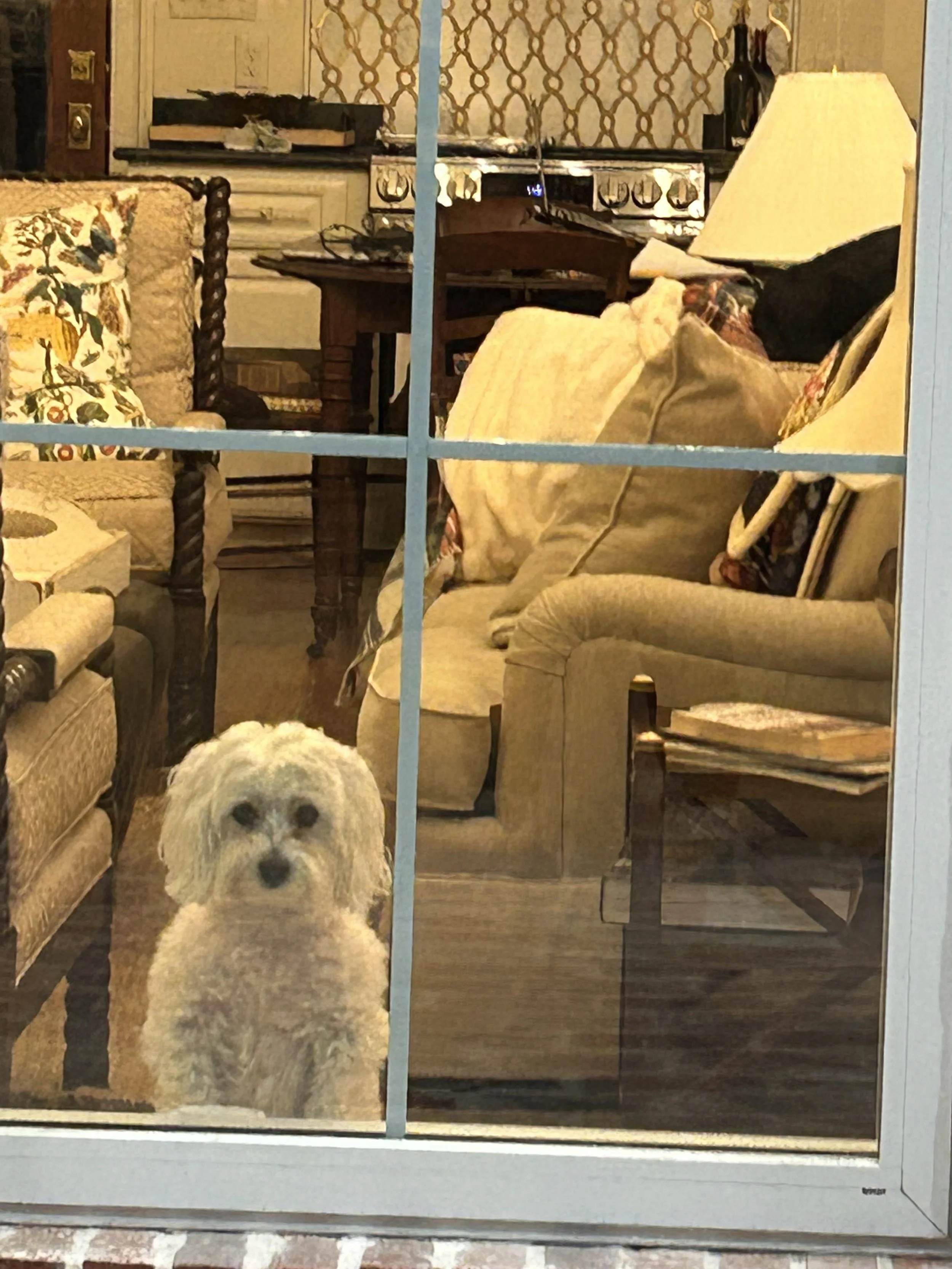
Staying in a cottage designed by Clawson Architects…Skipper was in awe of all the space outside…but was also unable to figure out exactly where we should go. There was not clear path.
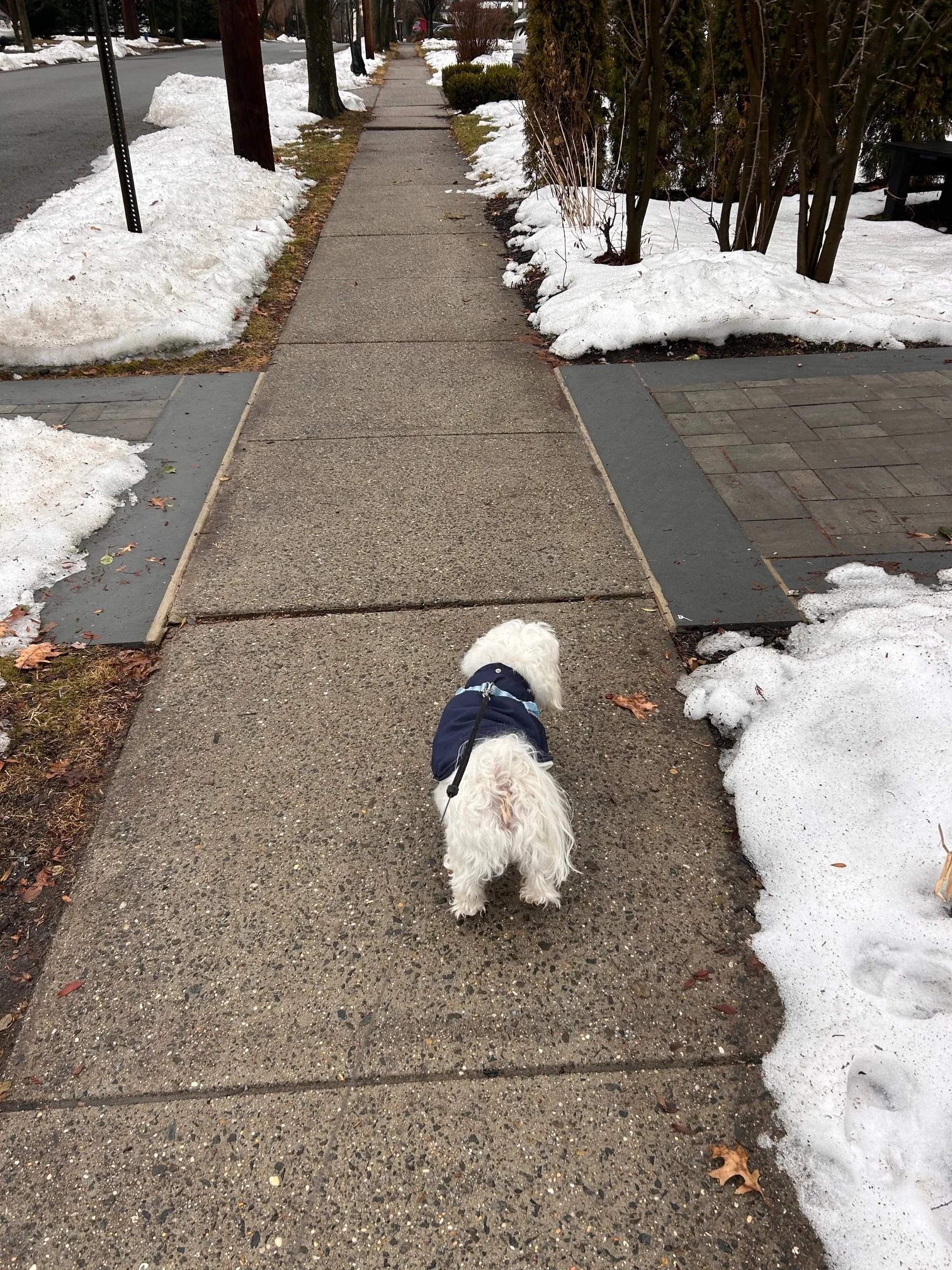
At home in Maplewood, sidewalks frame his daily routine. They create order and predictability. When we finally returned home, he trotted down our familiar sidewalk with visible relief and pulling me from one friends house to another to let the gang know he was back in town.
Today I saw a post on Facebook by a new resident in town being unexpectedly thrilled that Maplewood/South Orange, NJ has sidewalks. Of all the features to celebrate, that was the one that excited them. Not the amazing food scene, not the proximity to the train and NYC— the sidewalks.
I understood exactly what they meant!
Why Are Sidewalks Important in a Community?
Sidewalks are not decorative. They are civic infrastructure.
The benefits of sidewalks include:
Safer streets for pedestrians
Healthier residents in walkable communities
Stronger neighborhood connections
Greater independence for children and older adults
Reduced reliance on cars for short trips
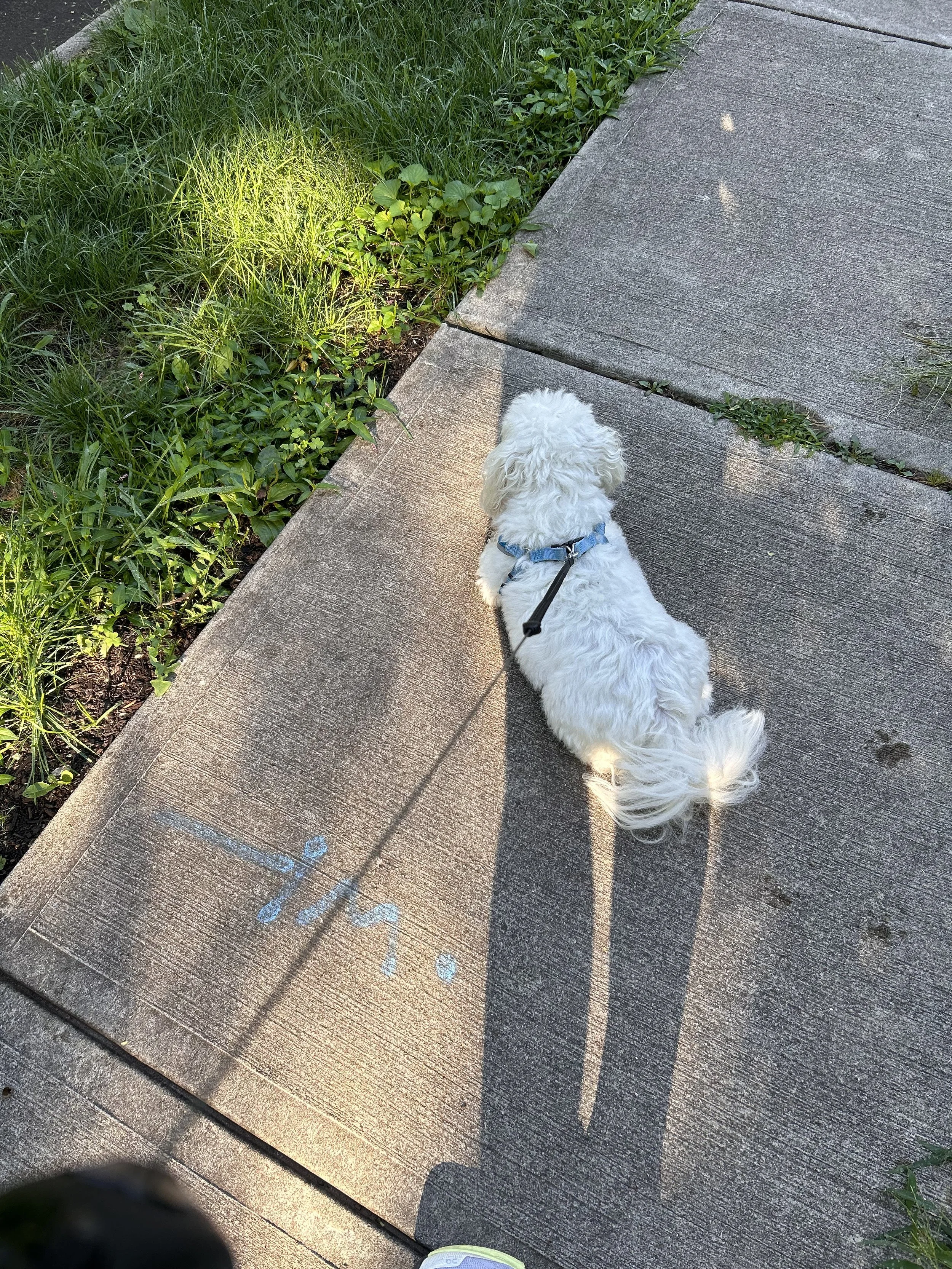
Skipper often takes a break and waits for friends he sees across the street to come say hello. He is all about the social aspects.
When a town is designed without sidewalks, it sends a subtle message: streets are for vehicles first. Pedestrians are secondary.
There’s a reason the phrase Where the Sidewalk Ends resonates. When the sidewalk ends, so does the clarity of public space.
Who Is Responsible for Sidewalk Maintenance?
Here’s where things get complicated — and where many homeowners are surprised…I refer to it as the hidden cost of home ownership….but does it have to be?
In many municipalities:
The town owns the sidewalk
The adjacent property owner is responsible for maintenance
That includes:
Snow removal
Crack and trip hazard repairs
Liability exposure
Damage caused by tree roots (even trees planted by the town)
Disruptions from municipal infrastructure work

While shoveling is not always fun, the community often comes together during this time…helping the older or infirmed neighbors. Our friend Vader, the black lab feels collecting sticks/fallen branches is their civic duty.
Visiting with our daughter recently, she exclaimed…”my law school professor wrote a book you are gonna love, it is about sidewalks!” Clearly, she has heard my rants.
Her professor and legal scholar, Michael Pollack, has written extensively about this and examines these tensions in his forthcoming 2026 book, Sidewalk Nation: The Life and Law of America's Most Overlooked Resource. Online pre-reviews explain that his work highlights how sidewalks influence everything from accessibility law to free speech to public health. They are one of America’s most overlooked civic resources.
Knowing about the experiences of many getting the dreaded letter in the mail about sidewalk repairs, my daughter was excited to share that during an office hours meeting, Professor Pollack described a town experimenting with a different approach to sidewalk maintenance. Instead of placing the full burden on individual homeowners, the municipality charges a modest annual fee into a shared sidewalk repair fund. When repairs are needed, the work is funded collectively.
Recent Repair at owners cost…caused by towns tree roots.
My own quick search into such programs indicated that nearby Livingston, NJ will reimburse homeowners for 50% of the cost of repairs.
Both models spreads costs, reduces conflict, and treats sidewalks as the shared infrastructure they are.
Do Sidewalks Make Communities Healthier?
Yes.
Healthy, walkable towns consistently show:
Higher daily physical activity
Stronger social cohesion
Increased property value stability
More vibrant local economies
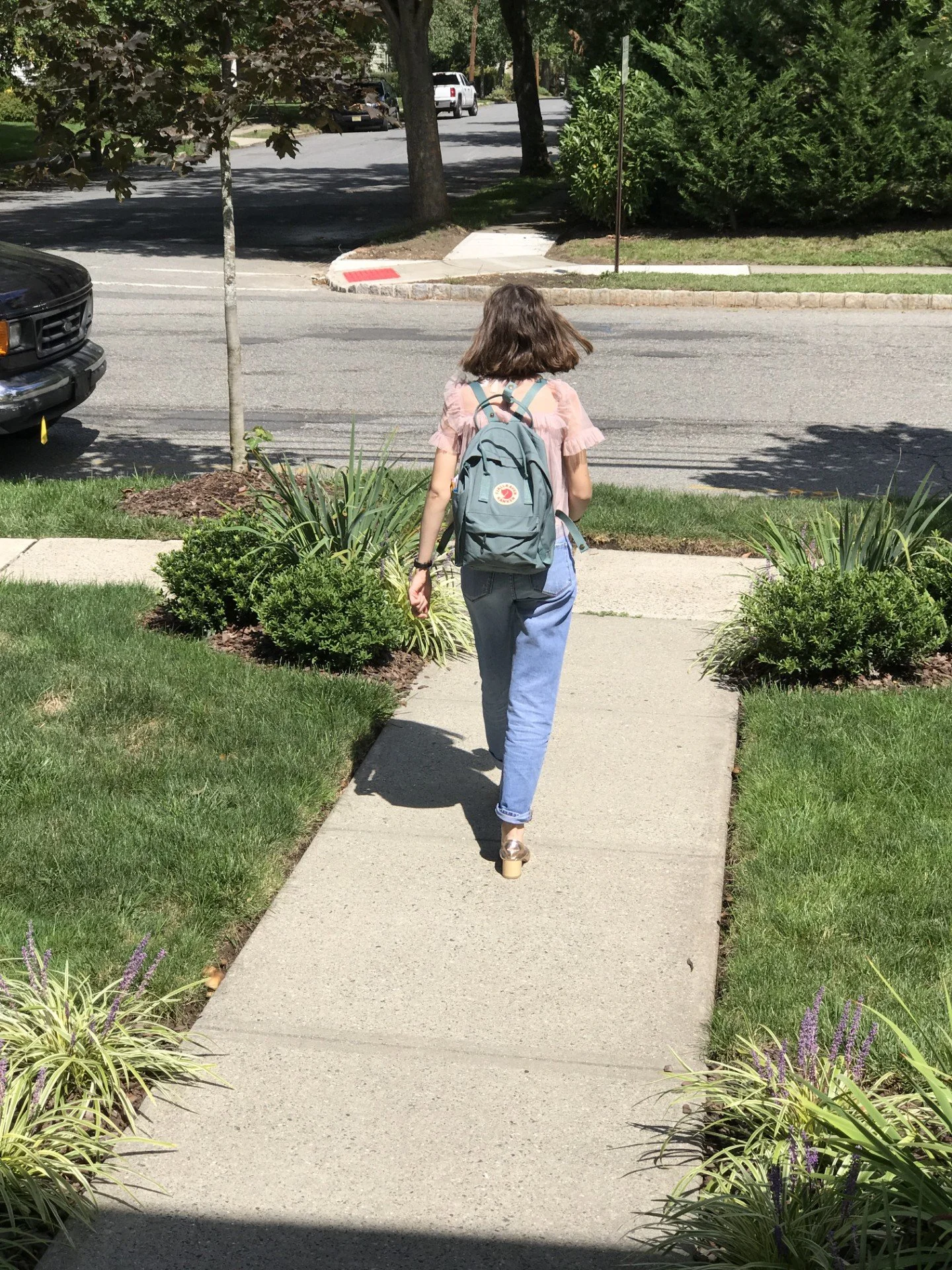
It makes walking to school a great and safe option.
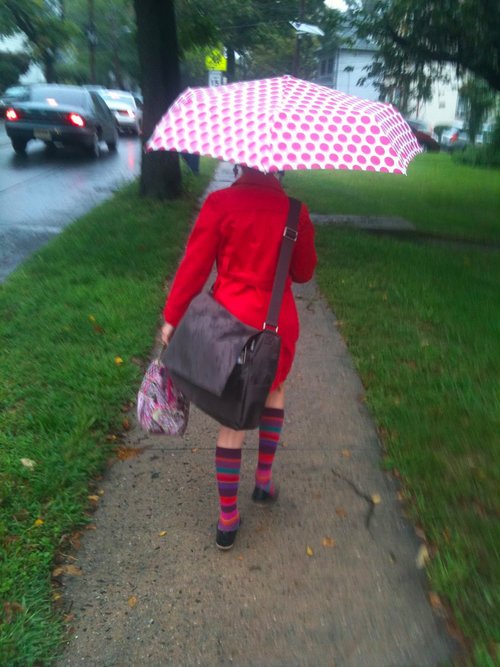
Rain and Shine!
When sidewalks exist, walking becomes effortless rather than strategic. You don’t calculate traffic patterns. You simply step outside.
And when people walk, they see each other… think people are outside walking their dogs…not releasing them to the back yard…it’s a chance to connect with neighbors and combats that new epidemic of loneliness.
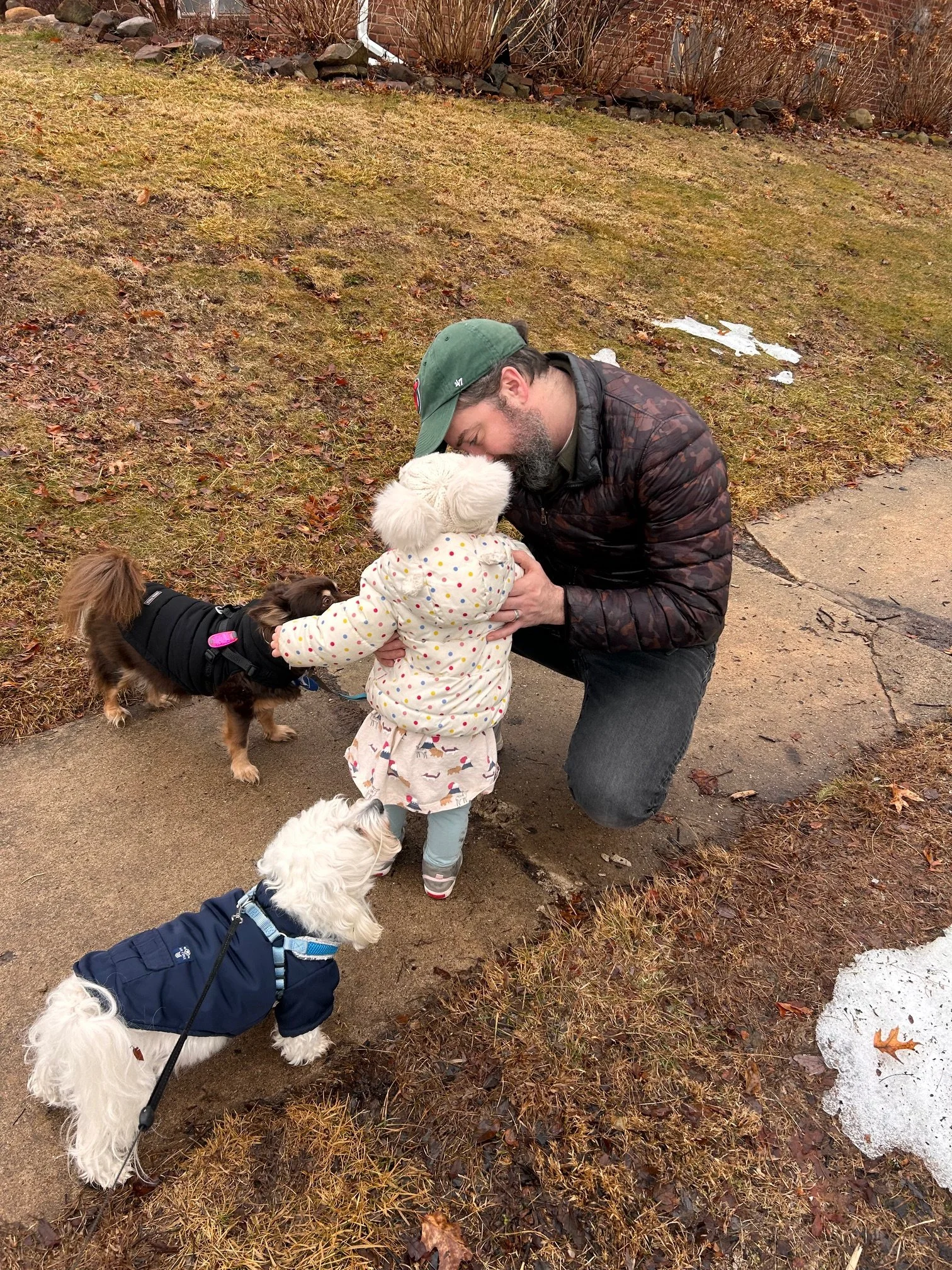
Meeting people along the way. Making new friends. Getting the scoop.
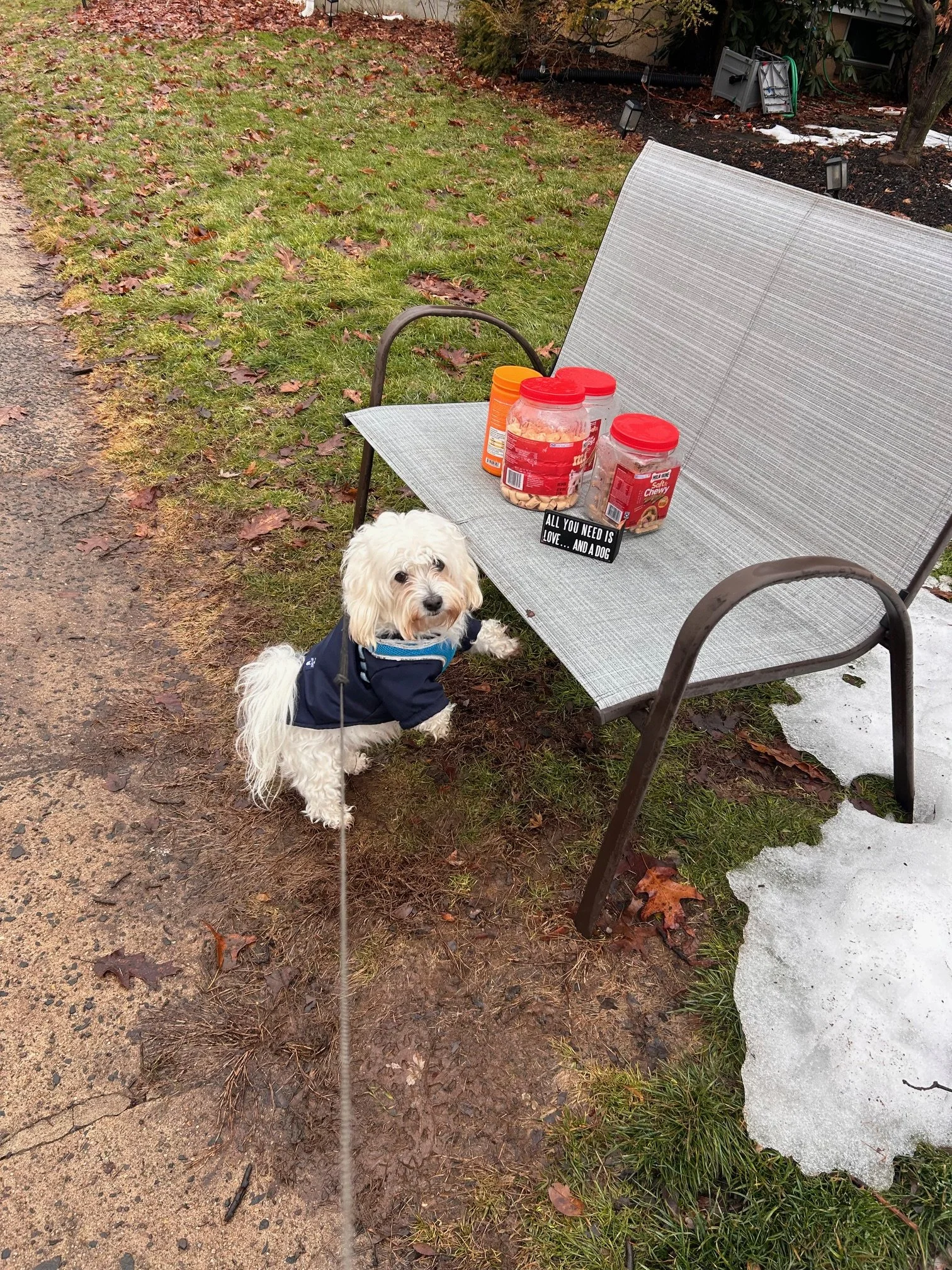
Our neighbor has bench next to the sidewalk where people contribute dog treats. Visits have become a part of every walk for some.
That’s how community forms.
Why I Care about sidewalks — As an Architect
As an architect, I care deeply about sidewalks because architects do not simply “sign drawings for permits.” We design space — and every building begins with its location.
Before walls, before materials, before details — there is context.
How a building meets the street matters. The presence or absence of a sidewalk changes:
The transition from private to public space
The safety of children walking to school
The independence of aging residents
The daily, informal encounters that build neighborhood trust
Sidewalks define the civic edge. They establish that people belong in public space.
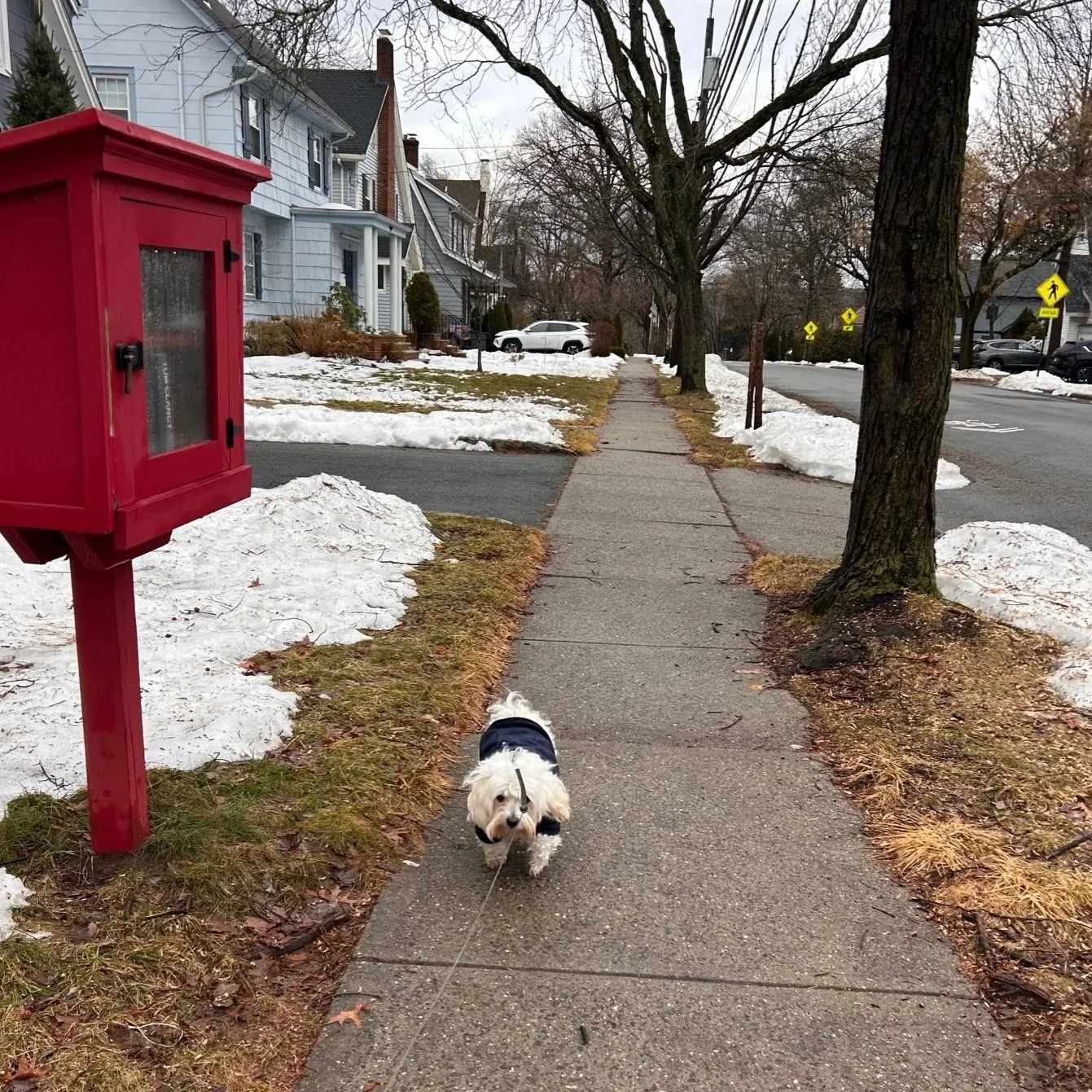
Sidewalk libraries are a great addition. I often see people looking to see what is new …I often see people chatting as they linger to discuss their great new find.
Without them, towns function — but they do not fully connect.
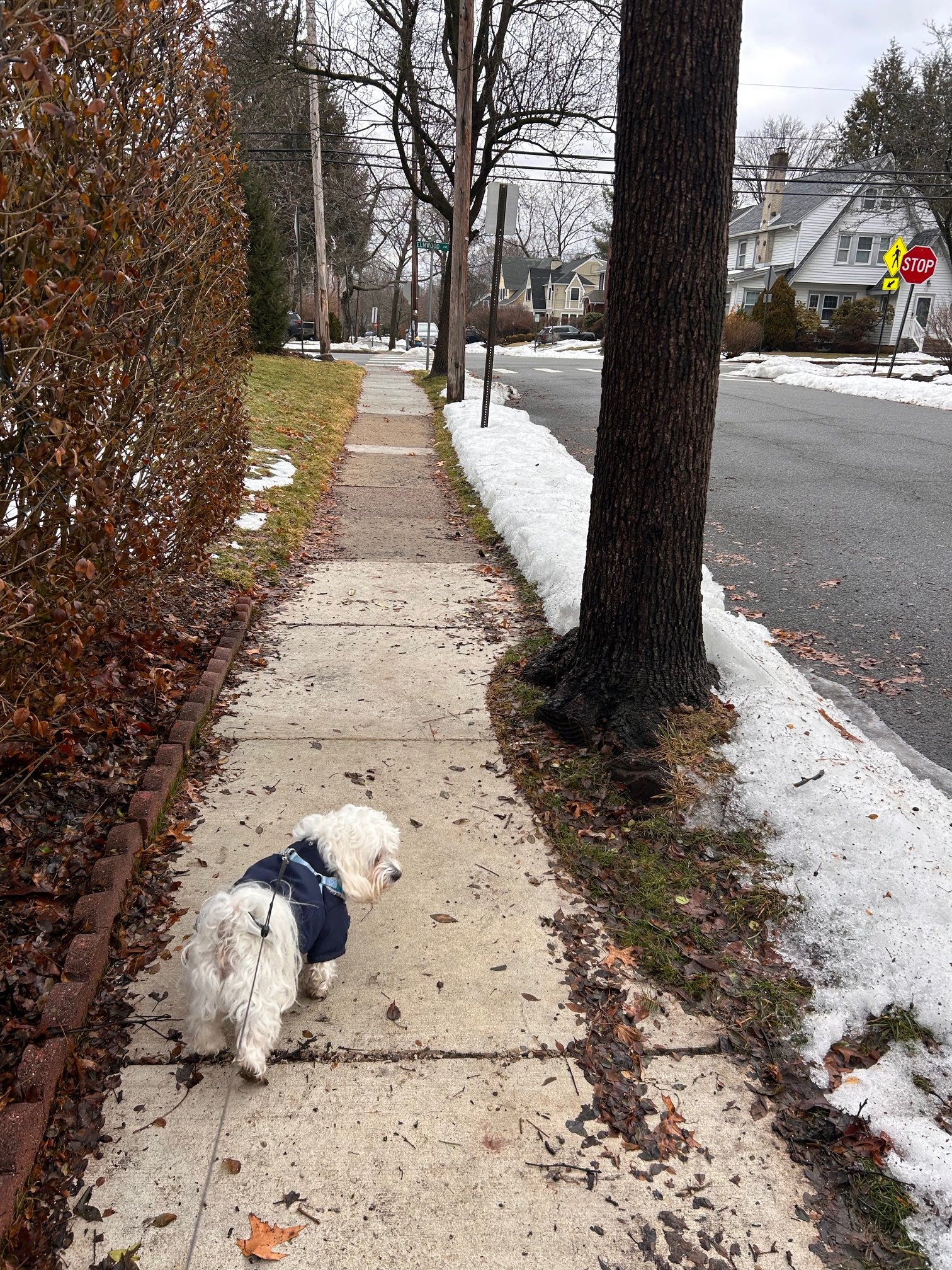
(Side note…all the cross walk signs in the image above are popping up everywhere as drivers race to where ever…sidewalks alone should be the clue that pedestrians are out and about…but again, now I know, towns with sidewalks are not the norm.)
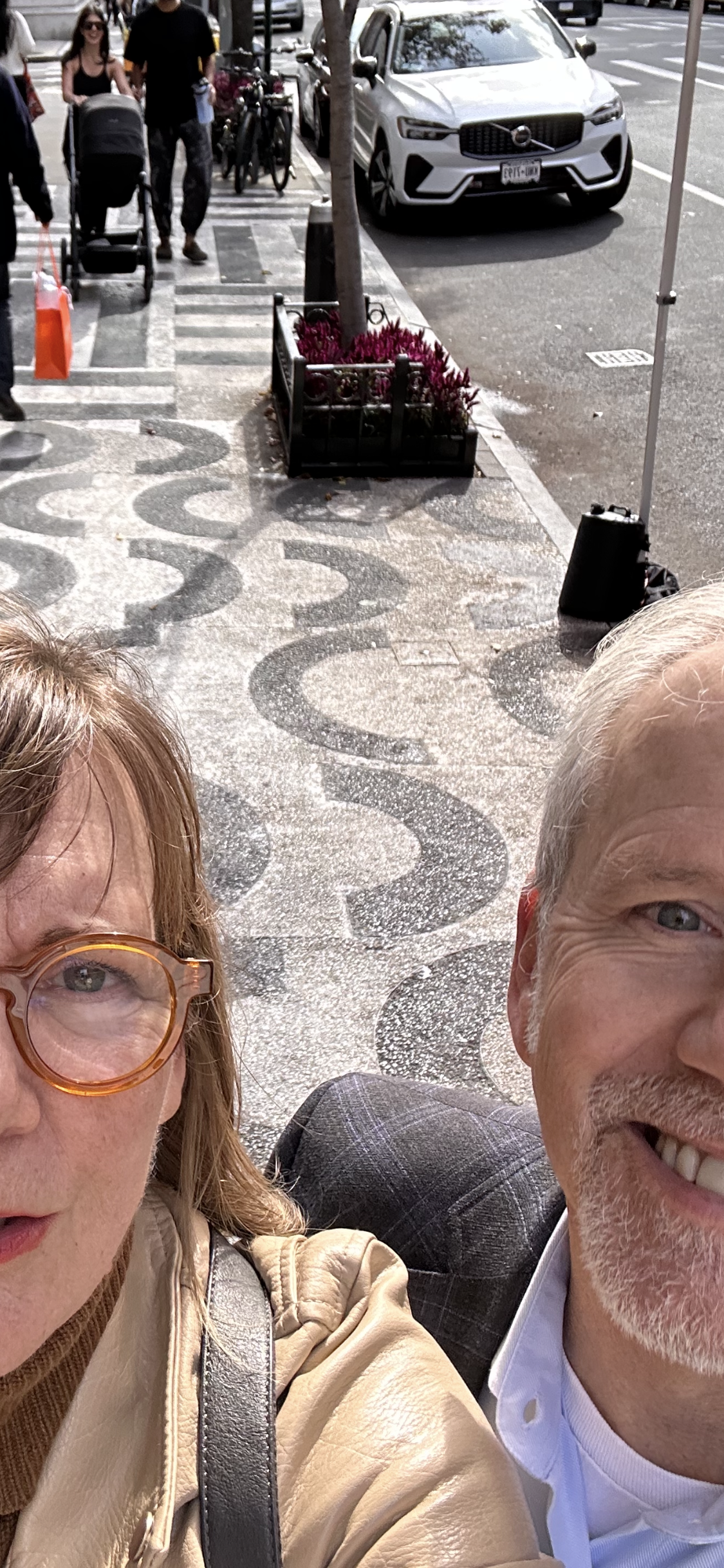
There are laws about the materials and patterns for sidewalks in most places…In NYC you are required to carry an insurance policy if it is not the standard brushed concrete square. We think this one sporting what looks like the Clawson “C” is worth the risk.
The Bigger Takeaway
After nine towns without sidewalks, coming home to Maplewood felt different. The sidewalks were no longer invisible. They were intentional. Valuable. Civic.
Sometimes you don’t realize the importance of walkable community design until it’s absent.
Sidewalks require maintenance. They require funding. They create legal complexity.
But they also create health, safety, and belonging.
Sidewalks are not background infrastructure. They are democratic space.
And after a month on the road, I’m more convinced than ever: when we invest in sidewalks, we invest in community…and if we ever leave our current home, our next place has to have sidewalks.